ABOUT THE PRAYER BOOK REBELLIONS
470 years ago, in the Summer of 1549, stirred up by a long string of abuses against their way of life and roused by the introduction of the new English-language Book of Common Prayer, the people of Devon and Cornwall rose in open rebellion against Royal authority in defence of their faith and liberties. Three outbreaks of armed resistance broke out independently: at Bodmin and Clyst St. Mary people gathered their arms and armour, and at Sampford Courtenay the first blood of the rebellion was spilled when William Hellyons, a local farmer, tried to persuade the mob to abandon their protest and was hacked to death on the steps of the church house.
From Bodmin the leader of the Cornish rebels, Sir Humphrey Arundel, sent a force to capture St. Michael’s Mount, and another to lay siege to Trematon Castle. The Sampford Courtenay rebels marched to Crediton, gathering supporters on the way. Local gentry attempted to diffuse the situation at Crediton, but the burning of a barn by one of their servants lit the touch paper of wider rebellion. As the news of the barn-burning spread across Devon thousands of commoners left their homes and joined the rebel force. Arundel marched the main body of Cornish rebels to join the Devon men at Crediton, and together they made for Exeter.
Exeter, known for its strong loyalty to the Tudor regime, was the largest and best-defended city west of Bristol. The rebels anticipated being able to take the city with ease for most of its inhabitants, including the mayor John Blackaller, were sympathetic to their cause. Nevertheless, loyalty to the crown overcame the inhabitants’ religious dissent and under Blackaller’s leadership the city closed its gates and hunkered down for an unexpected siege. There was no time to stockpile supplies, and for five weeks the city was cut off from the outside world as they waited for a royal army to relieve them.
The authorities had not been idle. Sir Gawain and Sir Peter Carew had first tried to pacify the insurgents of Clyst St. Mary and, having failed there, rode to London to urge the Privy Council to act. The Earl of Bedford, Edward VI’s commander in the West, reached Honiton in early July, but with a minimal force felt unable to assault the rebel force which was daily growing in strength. Slowly troops trickled in to join his army from Somerset and Wiltshire, and towards the end of the month his force was stiffened by the arrival of a large band of German and Italian mercenaries who had been employed for a war against Scotland but found themselves diverted to crush the Western commons.
On 28 July Arundel sent a large force to block the Bedford’s route to Exeter at Fenny Bridges, and the two armies met. Fierce fighting ensued and Bedford managed to obtain an inconclusive victory against the rebels. As his troops settled to rest and plunder the dead they were suddenly assailed by a storm of arrows as a body of Cornishmen led by Robert Smyth of St. Germans recommenced the fighting. Bedford’s German mercenaries were able to drive off the newcomers, but the incident frightened Bedford who, hearing rumours of a fresh rising in East Devon, retreated back to Honiton.
Four days later, having received further reinforcements, Bedford set out once more for Exeter. At Clyst St. Mary the villagers had thrown up ramparts to defend their village, brought cannon from ships moored at Topsham, and stood determined to prevent Bedford’s advance. Bedford marched his army as far as Woodbury Common and there camped for the night, ready to assault Clyst St. Mary in the morning. The rebels, however, were not waiting to be attacked. Alerted to the presence of Bedford’s army by his scouts, Arundel sent a scratch force to take Bedford by surprise, and before the royal army had made much progress they found themselves engaged in the second battle of the campaign. The rebels, badly outnumbered, had little chance of victory but their attack on Bedford’s army gave Arundel time to flood the ramparts of Clyst with fresh defenders, so that when Bedford finally arrived there he found himself facing yet another stiff fight. On 5 August Bedford ordered the assault of the village. His men found themselves in bitter close-quarters fighting on the ramparts and in the narrows sunken lanes before they finally burst through the defences and succeeded in capturing the all-important bridge over the River Clyst, the last major obstacle on his advance to Exeter.
Having fought three battles in a week Bedford’s men were tired, so instead of pressing on towards Exeter immediately he ordered them to camp on Clyst Heath. Despite believing that the rebel army was now broken, he has learned the lesson of Woodbury Common and ensured that his camp was properly defended against surprise attack. His army had taken around 900 rebel prisoners in the last few days, and Bedford now became concerned about the threat these men would pose should the rebels attack again. They were bound with rope and in the space of ten minutes their throats were cut by the Germans in one of the worst massacres committed on English soil.
Bedford was right to be cautious. In one final throw of the dice to prevent Bedford’s army relieving Exeter Arundel launched an all-out assault on Bedford’s camp at dawn the next morning with every rebel available to him. Lord Grey, one of the most experienced veteran commanders of the day, described the fighting that morning as the most ferocious he had ever seen, a testament to the courage of the men of Devon and Cornwall. But it was to no avail, and by the afternoon of 6 August the rebel army was defeated and Bedford reached Exeter. The starving inhabitants begged Bedford to leave his army outside the city walls. There was no triumphant march through the city gates, only a bitter and rather sad sense of relief.
Bedford remained in Exeter while his exhausted men recuperated, making plans for the pacification of the West, comfortable that the rebels would cause him no more trouble. Then, a week after his arrival, word reached him from a spy in the rebel camp, that Arundel had retreated to Sampford Courtenay where the rebellion had begun in Devon, and was regrouping his army. The following day he marched his army west and, after pausing overnight at Crediton where the charred remains of the barns stood as a reminder of the time just a few weeks before when the rebels had been in the ascendant, ordered the complete destruction of the rebel force.
After a battle lasting most of the day the rebel army was finally broken. Hundreds lay dead, their blood seeping into the lush Devon soil. Some fled north and made a final, unsuccessful, stand at King’s Weston in Somerset. Arundel, with the tattered remnants of his defeated army, planned a last stand at Okehampton, but fled to Launceston in the face of Bedford’s advance and there was captured.
Arundel, together with other ringleaders, was taken to London and there faced traitor’s end. He was tried and on the morning of 27 January, 1550, was hanged, drawn, and quartered. The Provost Marshal, Sir Anthony Kingston, was ordered to go through the West Country, sparing the commoners who had taken part in the rebellion but exacting a vengeful justice on those who had led it. The mayors of Bodmin and Torrington were hanged in their towns, as was the port-reeve of St. Ives. The Privy Council ordered that the greatest retribution should be directed against the clergy who had encouraged the masses. Fifteen or morepriests from Devon and Cornwall were executed, and more were turned out of their churches. Robert Welsh, the vicar of St. Thomas, Exeter, was hanged from the steeple of his own church and it is said that his body remained there for the next four years. Simon Morton of Poundstock was taken to Stratton and hanged in the market place. The total death toll of the rebellion is not known but estimates range from five- to ten-thousand, perhaps as many as a third of the adult male population of the region. Small wonder, then, that for a generation the ‘Commotion Time’ of 1549 was the event by which time was measured in the West Country.
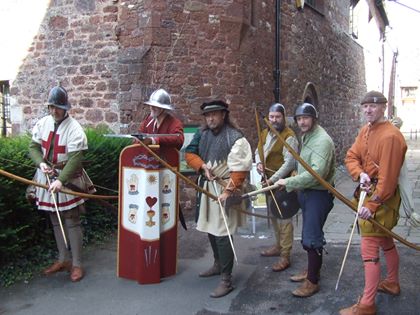
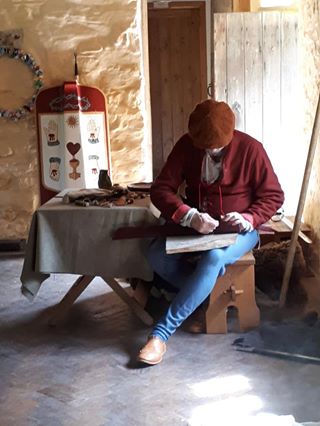
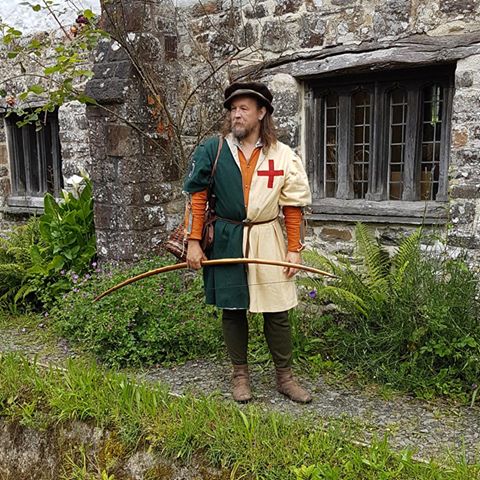
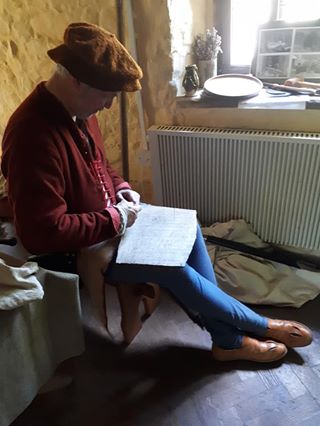
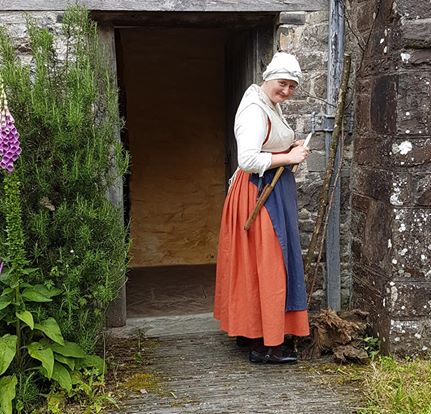
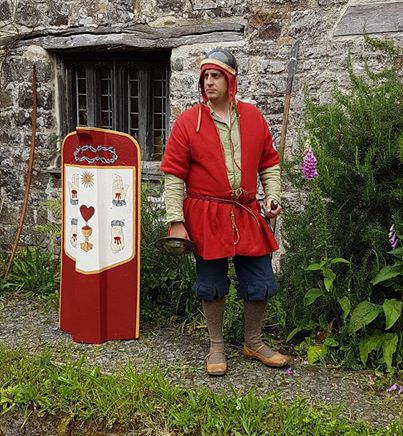
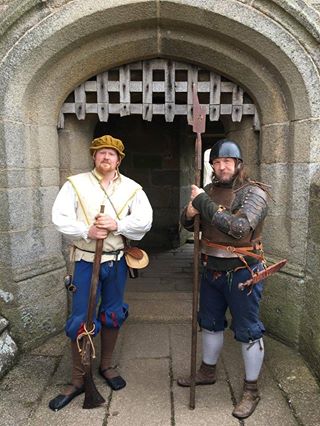
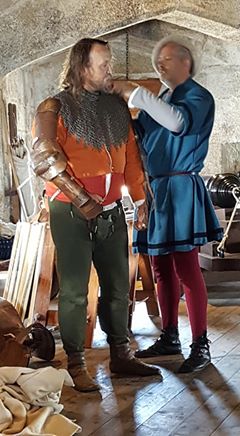
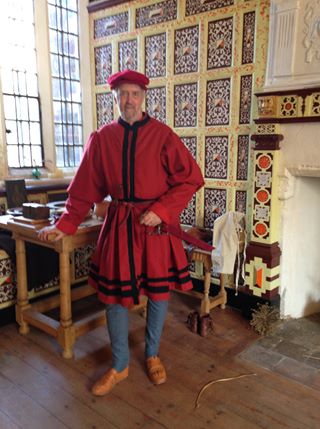
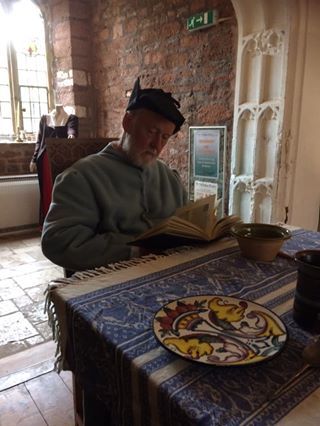
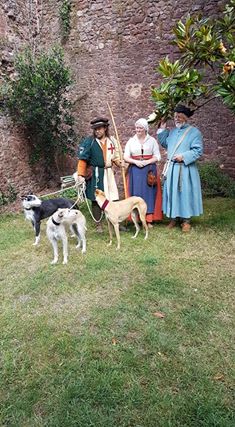
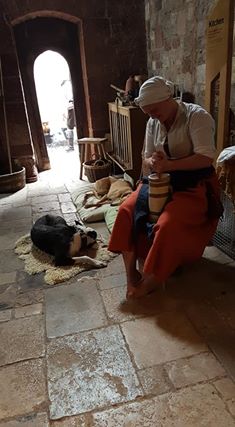
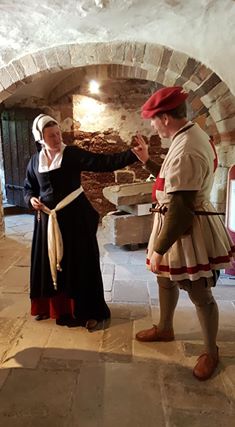
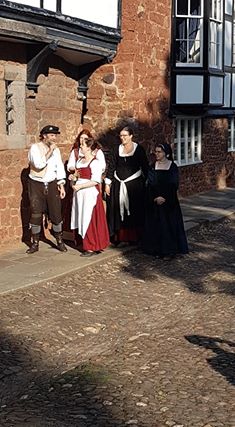
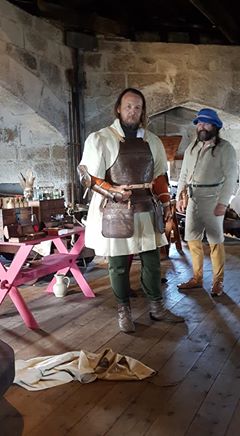
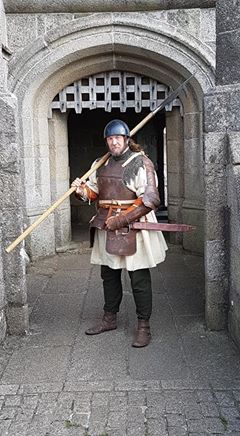
‘The Commotion Times’ is a living history group dedicated to recreating life at the time of the Western Rebellion through costumed interpretation and live activities.
CIVILIAN LIFE
BILLMEN - THEIR ARMS & ARMOUR

ARCHERS